Interview with Ben Uelk of Maze Dojo: From Doodles to United Mazes of America
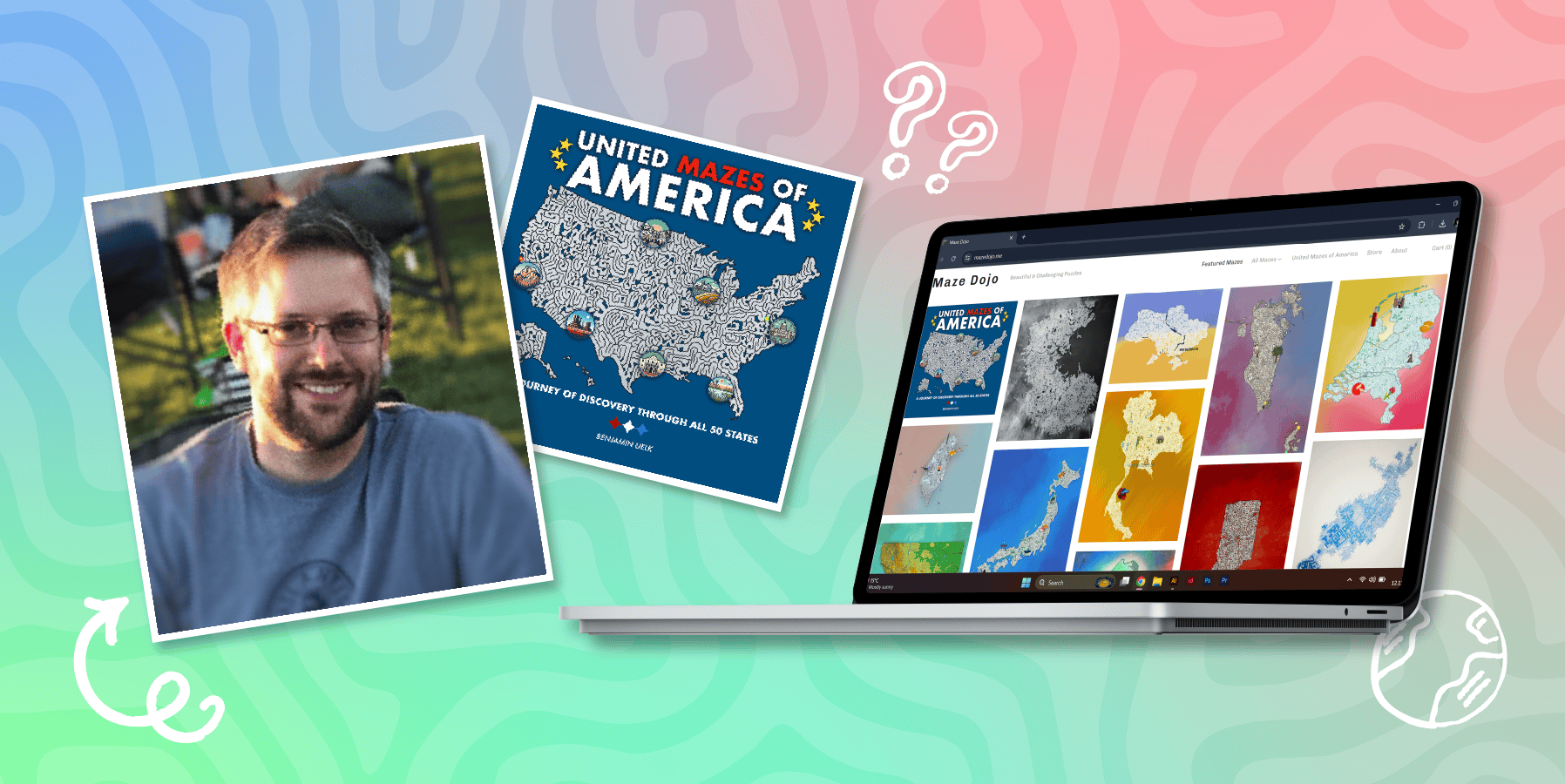
Visual artist and maze-maker Ben Uelk has been drawing intricate, hand-designed mazes since 2007. What began as casual doodles grew into Maze Dojo, a practice and a place, and culminated in United Mazes of America, a 12″×12″, 113-page, full-color interactive art book in which each of the 50 states becomes a hand-drawn maze paired with a facing page of facts, symbols, and snapshots of history. We talked about process, persistence, and why a personal website on .ME became the natural home for it all.
From your very first maze to your own published book, how did Maze Dojo come to life?
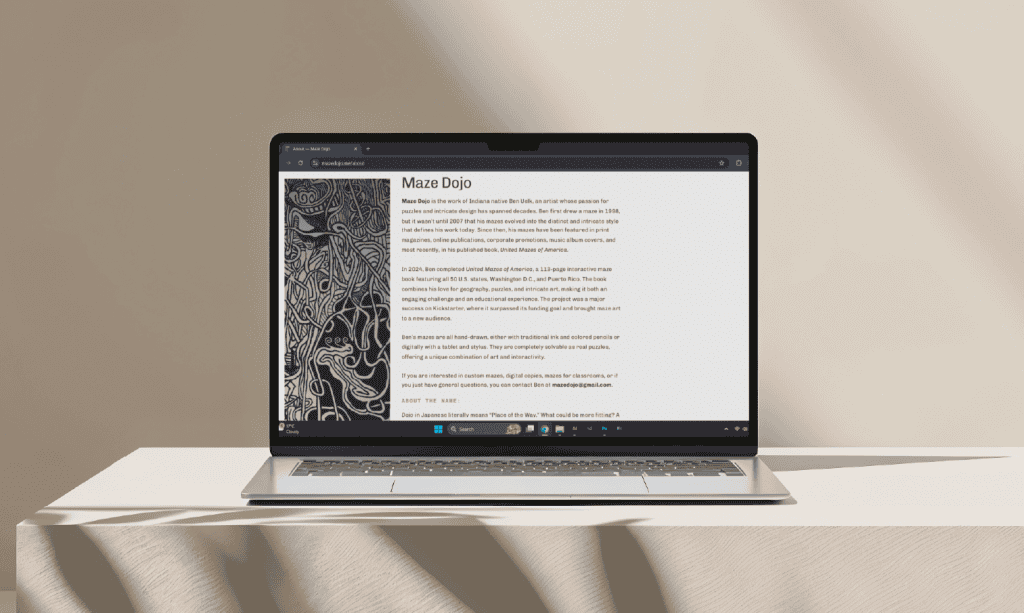
I started drawing mazes in 2007 as simple doodles to pass the time. I grew up on visual scavenger-hunt books like I Spy, Where’s Waldo, and Magic Eye, and I was drawn to artists like M.C. Escher. Over time, those doodles evolved into a recognizable style, and people began asking for prints and custom pieces. I created Maze Dojo as a home base for that growing body of work – a place to share new mazes and document experiments that blend geography, history, and wimmelbilder-style detail. Since then, my mazes have appeared on album covers, in corporate and nonprofit projects, magazines, and ultimately in my own book.
Do you remember the moment drawing mazes shifted from pastime into something more? How did United Mazes of America take shape?
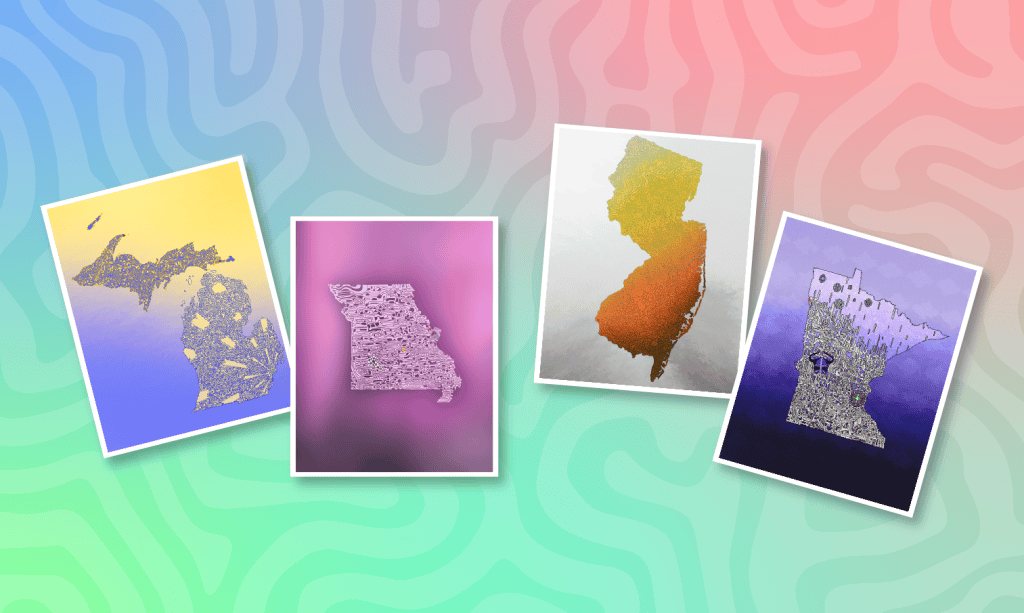
I’m a geography buff – I can happily lose hours in an atlas or on Google Earth. In 2018, I sketched the outline of Maine and started experimenting with paths inside it. By 2020, during the pandemic, I committed to completing all fifty states. I knew the work needed to live in a large, cohesive book with state history, fun facts, and landmarks. The scope was huge—fifty states (and later D.C. and Puerto Rico), layout choices, research, and test prints. I questioned the journey more than once, but each finished state reinforced the idea. Community support kept me going, and a successful Kickstarter validated the project. The result is a 12″×12″, 113-page book – an interactive way to explore the USA through art. Maze Dojo, and especially mazedojo.me, became the hub for sharing progress, gathering feedback, and now showcasing the finished work.
Creating a hand-drawn maze sounds like a blend of discipline and instinct, what does your process actually look like?
It’s both. I usually begin with a framework, an outline of a state or a landmark, but once I start filling in pathways, I let instinct take over. The maze grows organically, almost like a living pattern I’m tracing rather than strictly planning. That balance between structure and improvisation keeps it fun and unpredictable. I never quite know how it will look until it’s finished.
Do you sit down with a plan, or let the maze unfold as you draw? What tools or rituals shape your routine?
I begin with a general shape in mind, but the pathways are improvised. My main tools are an iPad and Apple Pencil. I used to work with ink and paper, but digital drawing lets me zoom in, refine details, and make adjustments without losing the hand-drawn character. I don’t keep strict rituals, though I often listen to music, audiobooks, or podcasts. It helps me drop into a flow where time disappears and the maze almost creates itself.
And how do you know when a maze is truly “done”?
When the pathways feel balanced – challenging but not impossible – and the design has visual harmony. I test-solve it myself and sometimes hand it to someone else. Once it works as both a puzzle and a visual piece, it’s done.
You launched a successful Kickstarter, released a book, and built a visual language – what did that journey teach you?

Persistence pays off. Turning something as niche as hand-drawn mazes into a full book required years of dedication and problem-solving, plus trust that an audience existed. The Kickstarter was a turning point; it funded in eight hours, which told me the idea resonated.
What challenges came with turning something so personal into a product for the world?
Balancing the puzzle side with the educational and artistic side. I wanted United Mazes of America to be more than a book of mazes – it needed to be interactive, visually striking, and packed with state facts and symbols that stand on their own. That meant endless rounds of editing, design decisions, and test prints, all while preserving the hand-drawn personality.
What have you learned about your audience, what pulls people into a maze?
Mazes invite people to slow down. In a world that’s fast and digital, a maze asks you to pause, trace a line, and get a little lost. People come for the challenge and stay for the sense of discovery.
In the digital world, your website is often the first place people encounter your art. How has having a site shaped engagement?
A website is the front door to my work. Social media is fast and fleeting; a dedicated site creates a lasting home where I can curate projects and show the bigger picture – from simple doodles to a published book. It makes the mazes more approachable and the journey more understandable.
Does it help people understand your process, or mostly make the work accessible?
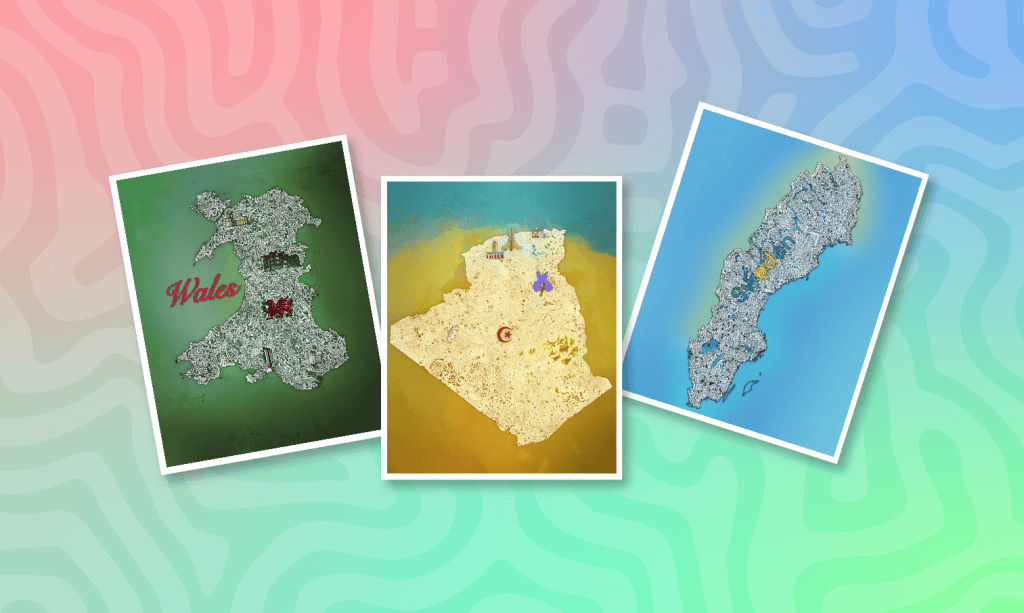
Both. Having everything in one place makes the work accessible, and it gives me room to share process notes, early sketches, and behind-the-scenes details. People like knowing these aren’t computer-generated; the site helps me tell that story.
When it came to naming it MazeDojo.me, why choose .ME?
“Dojo” suggests a place of practice and discipline. Pairing it with .ME gives it a personal stamp – like inviting people into my creative space. It’s memorable, easy to share, and feels like a natural extension of the project.
If one of your mazes could speak, what would it say about its creator?
“Here’s someone who finds joy in getting lost in the details.” My mazes reflect how my mind works: layering detail, weaving paths, and finding order in what first looks chaotic.
Do you see your mazes as self-portraits or maps of where your mind wanders?
Definitely a map. Each maze is a snapshot of focus, patience, and curiosity. Less a portrait of me and more a window into how I like to explore the world.
What mood or challenge do you hope each piece invites?
Curiosity. Mazes invite you to slow down, notice details, and take wrong turns without consequence. They’re a challenge – and a reminder that detours can be part of the fun.
And when someone solves one, what do you hope they walk away with (besides reaching the end)?
A sense of discovery. If it sparks wonder, teaches something about a place, or offers a moment of escape, it’s done its job.
Editor’s note: Ben’s story brings us back to patience, curiosity, and the joy of discovery. From the first doodles to a 50-state book, each maze invites you to slow down, follow a line, and find meaning in the details. If that resonates, MazeDojo.me is a good place to linger a little longer, and, if you’re building your own creative home on the web, consider a personal domain on .ME to make a mark.